A Middlefield winter tests every weak link in an aging gas furnace. The temperature swings off Powder Ridge, wind across Lake Beseck, and long subfreezing nights along the Coginchaug River create sustained demand that older systems cannot handle without strain. As parts wear, efficiency falls and safety margins shrink. Homeowners start hearing short cycling at 2 a.m., seeing higher gas bills, and noticing rooms that never quite warm up. Direct Home Services sees this pattern every season across 06455 and 06481, from Reeds Gap to Jackson Hill. The good news: focused maintenance and smart upgrades can add years of safe, reliable heat. When replacement makes more sense, modern high-efficiency furnaces deliver quieter comfort and lower operating costs that matter in Middlesex County’s coldest months.
What age does to a furnace in a Middlefield winter
Time and thermal stress change the way a gas furnace performs under load. Metal contracts and expands thousands of times each heating season. Electrical connections oxidize. Bearings dry out. Sensors pick up residue from combustion. In a mild climate, these issues show up slowly. In Middlefield, CT, they surface faster because the system runs long cycles during Arctic fronts and nor’easters.
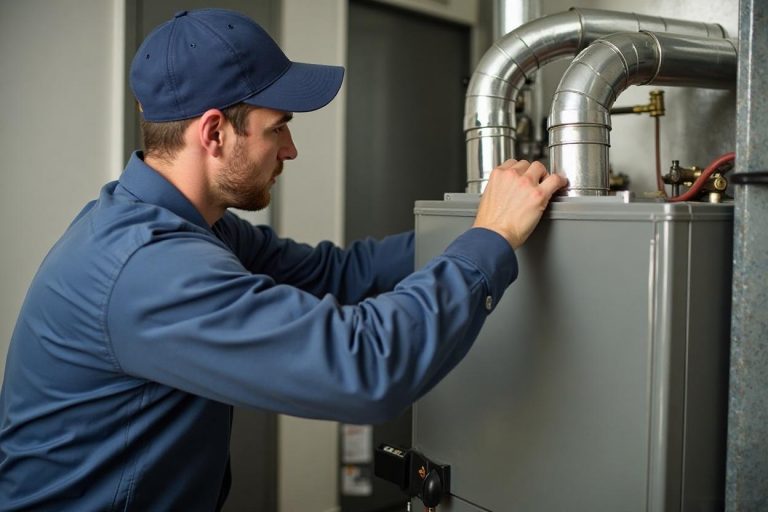
Older heat exchangers develop hairline cracks that open under heat, then close as the unit cools. A draft inducer motor that sounded fine in October may screech by January because its bearings are wearing under constant use. Ignitors that spark reliably in the shoulder season can fail in a cold snap when the furnace cycles more often. Aging components turn small inefficiencies into big problems once the thermometer dips and the load climbs.
Anecdotally, a 20-year-old single-stage natural gas furnace that ran acceptably at 30°F can short cycle and trip the limit switch when the wind chills hit the teens along Lyman Orchards. The same unit may struggle to push warm air to second floors in Rockfall colonials because the blower motor no longer maintains full RPM under static pressure.
Why cold magnifies common failures
Cold weather exposes weaknesses because everything works harder. Burner assemblies run longer. The blower fan works against colder, denser air. The heat exchanger sees greater temperature swings. Two issues stand out in older equipment:
- Heat transfer loss: Soot on burners, a dirty flame sensor, or restricted airflow through a clogged MERV 11 or MERV 13 filter reduces combustion efficiency and heat exchanger output. The furnace stays on longer to reach setpoint, which accelerates wear on the draft inducer motor and raises utility bills. Safety trips: Limit switches open more often on older systems. Overshoot from uneven flame, poor airflow, or failing blower capacitors overheats the heat exchanger. The limit trips, the system cools, and the furnace restarts. That short cycling wastes gas, stresses components, and leaves rooms chilly.
On service calls near the Levi E. Coe Library and down into Durham, technicians frequently find combinations of small issues that add up: a partially plugged vent pipe, a weak ignitor, and an overdue filter. Each alone is manageable. Together, they make a furnace unreliable during a cold spell.
The most vulnerable parts in aging furnaces
Direct Home Services checks a consistent set of parts because they drive safety and performance:
The heat exchanger takes the brunt of thermal stress. Small fractures can appear near bends or welds. Cracks risk carbon monoxide exposure, especially during long run times when pressure conditions vary. Technicians use inspection cameras and combustion analysis to confirm integrity.
The burner assembly and gas valve must deliver a stable blue flame. Yellow tipping or wavering flames suggest incomplete combustion from debris, improper gas pressure, or ventilation problems. This is common in older basements with changes to storage or renovations that altered makeup air.
The draft inducer motor needs smooth, quiet operation. Bearing noise or slow spin causes poor draft, delayed ignition, and repeated retries that wear the ignitor. In subfreezing temperatures, frost or ice near an exterior termination can compound the problem.
The blower fan should maintain airflow at design static pressure. Dusty blades, a failing motor, or a weak run capacitor cut airflow, which elevates heat exchanger temperature and triggers the limit switch. That is a frequent cause of short cycling in older systems across Jackson Hill and along the Coginchaug Valley.
Sensors and switches age too. A dirty flame sensor sends a false “no flame” signal, causing ignition lockout. A sticky limit switch fails late or early, whipsawing the system. The thermocouple or hot surface ignitor weakens and fails under repeat starts in extreme cold.
Thermostats and controls can add confusion. Old mercury thermostats drift. Poorly placed smart thermostats near drafts or sunlit windows cause unnecessary cycles. Technicians often relocate or recalibrate them to reduce short cycling.
Symptoms Middlefield homeowners notice first
Several signs show up before a full breakdown. Paying attention can prevent an emergency call on a single-digit night.
Rooms feel uneven. The first floor warms while bedrooms stay cool. That points to a blower motor struggling under the load or duct restrictions that only matter when the system runs long cycles.
The furnace turns on and off frequently without reaching setpoint. This is classic short cycling. It wastes fuel and hints at a clogged filter, flame sensor issues, or a marginal limit switch. Left alone, it often ends in a no-heat event.
There is a clicking sound with no sustained ignition. That suggests an ignitor problem, a dirty flame sensor, or a gas valve issue. In older units, these components fail more often during cold snaps.
The pilot light burns yellow or the flame dances. That is a combustion problem and a carbon monoxide risk. Do not wait on this one, especially in tight homes with recent weatherization.
Utility bills climb 10 to 25 percent year over year without a rate change. Efficiency losses accumulate in older furnaces. If the system still uses a standard 80% AFUE design, the gap versus a 95 to 98% condensing furnace becomes significant during long winters.
Why older systems struggle with Middlefield’s housing mix
Middlefield blends antique colonials, ranches from the 1960s and 1970s, and newer lakeside builds. Older homes near Rockfall may have long supply runs, undersized returns, or unsealed duct joints. Those systems ask more of a blower that is already near the end of life. Meanwhile, modern renovations around Lake Beseck often tighten the envelope, which changes combustion air dynamics for natural draft or older induced draft furnaces. Both scenarios increase the likelihood of short cycling and ignition faults when temperatures drop.
Basement conditions matter too. A propane furnace in a damp basement near Wadsworth Falls State Park may see more corrosion on the burner assembly and the vent pipe. Units installed decades ago with minimal clearance around the furnace now sit crowded by storage, which restricts airflow. Small details like these push an aging furnace over the edge in January.
The repair-versus-replace decision in cold climates
A rule of thumb fits Middlesex County well: if the furnace is over 15 years old and needs a repair that costs more than 20 to 30 percent of a new system, replacement often saves money over five to seven winters. The calculation improves further with high-efficiency condensing furnaces. Modulating and two-stage models run longer, quieter cycles at low fire, which keeps rooms steady without spikes in gas usage. For many Middlefield homeowners, a 95 to 98% AFUE system trims winter gas spend by a noticeable margin, especially compared with 20-year-old 80% AFUE equipment.
That said, not every older furnace needs to go. Many systems in the 10 to 15-year range recover well with a thorough tune-up: clean the flame sensor, verify gas pressure, lubricate bearings, replace the filter with a correct MERV rating, and confirm draft. If the heat exchanger is sound and the draft inducer motor passes inspection, targeted repairs can deliver reliable heat through the season.
What a focused tune-up looks like
Direct Home Services treats maintenance as a safety inspection first, then an efficiency boost. The team’s 21-point approach is built for New England winters and older hardware. Highlights include inspection of the heat exchanger for hairline fractures using visual and diagnostic methods, cleaning the flame sensor to prevent ignition lockout, and testing the limit switch and pressure switch for proper response times. Technicians measure temperature rise, confirm inducer motor performance, check the vent pipe for blockages, and verify combustion quality at the burner assembly.
For airflow, they assess the blower fan and housing, test the run capacitor, and inspect the filter and return pathways. In Middlefield’s mixed housing stock, technicians often find best results with MERV 11 to 13 filters that balance filtration and airflow. They also calibrate thermostats and review duct issues that cause uneven heating.
Equipment choices that handle Middlefield winters
High-efficiency condensing furnaces make a clear difference in zip codes 06455 and 06481. A modulating or two-stage furnace smooths out the temperature profile in draft-prone areas and older homes with mixed insulation levels. These systems maintain comfort on low output most of the day, then scale up during cold snaps.
Direct Home Services installs Energy Star certified furnaces across a range of brands. As a Carrier authorized specialist, the team offers the Infinity series for clients who want maximum comfort control, quiet operation, and strong energy savings. They also maintain and repair Goodman, Bryant, York, and Rheem equipment seen throughout Middletown, Durham, Meriden, Wallingford, and Higganum. For hybrid applications, Mitsubishi dual-fuel solutions pair well with modern gas furnaces to leverage electric heat pumps in milder weather and gas heat during deep cold.
Local realities: service areas and response
local gas furnace repairProximity matters on a zero-degree night. Located minutes from Lyman Orchards and Powder Ridge Mountain Park & Resort, Direct Home Services provides rapid response across Middlefield and Rockfall. Technicians cover Reeds Gap, Baileyville, Lake Beseck, and Jackson Hill daily. The team handles natural gas and propane (LP) furnaces with equal familiarity, including older single-stage units and newer high-efficiency condensing furnaces vented through sidewalls.
Homeowners across 06455 and 06481 can expect priority heating repairs during severe weather, with 24/7 emergency dispatch for no-heat calls. The goal is simple: stabilize the system, restore heat, and prevent repeat failures when the next cold front arrives.
Common repair scenarios seen in Middlesex County
Several patterns repeat each winter:
A short cycling furnace with metallic banging turns out to have a clogged filter, a delayed ignition that causes duct expansion noise, and a failing draft inducer motor. After replacing the filter, cleaning the burners, and installing a new inducer, the furnace runs quiet even in the teens.
A propane furnace near the Durham line shows a yellow pilot and frequent lockouts. Combustion analysis reveals poor draft from a partially obstructed vent pipe and a dirty flame sensor. Clearing the vent, reseating the gas valve connections, and cleaning the sensor restores a crisp blue flame.
A 90%+ condensing furnace in Rockfall freezes its condensate trap during a severe cold snap. Adjusting the condensate line routing, adding heat tape, and insulating the line prevents future shutdowns.
A single-stage natural gas furnace in a Lake Beseck cape cannot keep up with overnight lows. The blower capacitor tests weak and the temperature rise is high due to a neglected filter. Restoring airflow with a new capacitor and filter stabilizes the system. The homeowner later opts for a two-stage furnace to cure the comfort imbalance.
Safety is non-negotiable: carbon monoxide and code
Any suspicion of a cracked heat exchanger or combustion issue calls for immediate attention. Direct Home Services uses CO testing and visual inspection to confirm heat exchanger condition. The team carries Connecticut S-1 licenses and follows state mechanical codes, venting rules, and manufacturer specs. If a heat exchanger is compromised, the technician discusses options for heating system replacement, temporary safe heat if needed, and a plan to prevent exposure risks. Aging equipment does not receive a pass on safety just because it still starts.
What homeowners can do between professional visits
A little routine care reduces emergency calls and high bills:
- Replace or wash filters on schedule, often every one to three months in winter, especially with MERV 11 or MERV 13 media. Keep the area around the furnace clear by at least a few feet to preserve airflow. Check exterior terminations for frost, leaves, or nests after storms. Listen for changes in startup sounds and fan noise. New rattles or squeals signal work needed. Schedule an annual tune-up before the first frost to catch problems early.
Gas furnace services Middlefield residents rely on
Direct Home Services offers a full set of gas furnace services built for local homes:
Gas furnace repair for ignition failures, blower motor issues, short cycling, and airflow problems. The team stocks common parts like ignitors, flame sensors, and capacitors to resolve most calls on the first visit.
Annual tune-ups that focus on safety and efficiency. The service covers cleaning, testing, and adjustments that sustain performance through deep winter.
Emergency heating service available 24/7 during blizzards and cold snaps. Dispatchers prioritize no-heat situations across Middlefield and Rockfall.
Furnace installation for natural gas and propane systems. Options include high-efficiency condensing furnaces at 90%+ AFUE, two-stage and modulating models, and matched systems with smart thermostats for precise control.
Heating system replacement when the heat exchanger is cracked, repair costs exceed value, or the homeowner wants lower bills and better comfort. Free estimates and financing are available.
Forced air heating expertise that includes duct evaluations, return sizing improvements, and corrective work that prevents hot-and-cold spots common in older Middlesex County homes.
Energy audit guidance that helps homeowners understand heat loss patterns, infiltration points, and the payback of upgrades from insulation to equipment.
Brand expertise and parts familiarity
Technicians work on all major brands seen in Middlefield. That includes Carrier, Trane, Lennox, American Standard, Rheem, Bryant, York, and Goodman. They also handle Mitsubishi hybrid systems that pair with gas furnaces in dual-fuel configurations. Familiarity with components matters on a freezing night: heat exchangers, burner assemblies, blower fans, draft inducer motors, gas valves, thermocouples, limit switches, thermostats, and venting. Knowing how each part fails with age speeds diagnosis and avoids repeat visits.
Credentials, offers, and what to expect
Homeowners want straight answers and dependable work. Direct Home Services holds valid Connecticut S-1 licenses and NATE certifications. The company is BBB accredited and installs Energy Star rated systems. Every installation follows code, and the team provides clear documentation for permits and inspections. Repairs include a parts and labor warranty.
Middlefield homeowners can schedule a $99 Seasonal Furnace Safety Inspection to prepare for the first frost. The visit covers the key failure points discussed above and documents any recommended repairs. For replacements, the team offers free estimates and financing to spread costs across heating seasons.
Middlefield heating FAQ
How can someone tell if a furnace is safe to run through winter? A clean combustion test, a verified intact heat exchanger, and stable temperature rise under load are good signs. If the flame is yellow or the CO reading is elevated, the furnace should be shut down and inspected immediately.
Is a two-stage or modulating furnace worth it in this area? Yes. With frequent temperature swings, these furnaces run longer at lower outputs, which evens out room temperatures and often lowers bills. Homes near Lake Beseck and in draft-prone areas benefit the most.
What if the furnace short cycles only on the coldest nights? That often points to airflow limits or a weak component that only fails under stress. A clogged filter, weak blower capacitor, or marginal draft inducer motor can pass casual checks yet fail during heavy demand.
Can a cracked heat exchanger be repaired? No. A cracked heat exchanger must be replaced. If the furnace is at end of life, full heating system replacement is the safer, more economical path.
How quickly can a technician reach Middlefield during an outage? With 24/7 emergency dispatch and a base close to Lyman Orchards and Powder Ridge, technicians typically arrive the same day, often within a few hours during peak events.
The local advantage with Direct Home Services
Older gas furnaces struggle in cold winters because age compounds small flaws into system-wide failures. Middlefield’s climate and housing mix make those flaws surface faster. A practical plan—inspection of the heat exchanger, cleaning of the flame sensor, confirmation of draft and airflow, and replacement of weak parts—keeps legacy systems safe and steady. When replacement becomes the smart choice, high-efficiency condensing furnaces with modulating burners provide quiet comfort and meaningful savings for years.
Residents in 06455 and 06481 can get help fast. Direct Home Services provides gas furnace services throughout Middlefield, Rockfall, and nearby towns like Middletown, Durham, Meriden, Wallingford, and Higganum. Schedule a $99 Seasonal Furnace Safety Inspection, request an energy audit, or book an emergency visit. For new installations, ask about Carrier Infinity systems and financing options. The team is ready to keep Middlefield warm, from the orchards to the ridge, all winter long.
Direct Home Services provides HVAC repair, replacement, and installation in Durham, CT. Our team serves homeowners across Hartford, Tolland, New Haven, and Middlesex counties with energy-efficient heating and cooling systems. We focus on reliable furnace service, air conditioning upgrades, and full HVAC replacements that improve comfort and lower energy use. As local specialists, we deliver dependable results and clear communication on every project. If you are searching for HVAC services near me in Durham or surrounding Connecticut towns, Direct Home Services is ready to help.
Direct Home Services
57 Ozick Dr Suite I
Durham,
CT
06422,
US
Phone: (860) 339-6001
Website: https://directhomecanhelp.com/
Social Media: Facebook | Instagram
Map: Google Maps